
Cycle tracking
How to track your menstrual cycle: what to log and why
What to note each cycle, how predictions work, why a record and an estimate are different, and the cycle changes worth discussing with a doctor.

Tracking your cycle turns a blur of months into something you can look back on. A few months of simple notes can help you plan ahead, learn what is usual for you, and describe changes clearly if you ever need to see a doctor.
The basics of a cycle
A cycle is counted from the first day of your period (the first day of real bleeding, not spotting) to the day before your next period starts. Doctors’ guidance says a typical cycle lasts 21 to 35 days, and a period usually lasts up to seven days.
Your own cycle can vary from month to month. It often changes after childbirth, around perimenopause, with stress, illness or travel, and when you start or stop hormonal contraception.
What to log
- Period dates: the day it starts and the day it ends.
- Flow: light, medium or heavy, and anything unusual, such as large clots.
- Symptoms: cramps, headache, bloating, breast tenderness, acne, changes in mood, energy or sleep.
- Spotting: any bleeding between periods.
- Notes: illness, travel, stress or a new medicine that might explain a change.
You do not need to log everything. Start with your period dates, then add the symptoms that matter to you.
A record and an estimate are different things
A record is something you logged. A prediction is an estimate based on your past cycles. Good tracking keeps the two clearly apart, so a forecast never looks like something that happened. Predictions are best read as a range rather than a single date. They become more useful after several cycles and less reliable when your cycles vary a lot.
Give it a few cycles
Patterns need repetition. After three or more cycles you may start to notice your usual cycle length, whether certain symptoms cluster in the days before your period, or how your flow changes from month to month. These are patterns in your records, not diagnoses.
Changes worth discussing with a doctor
Doctors’ guidance in the US and the UK suggests getting advice if you notice:
- cycles shorter than 21 days or longer than 35 days;
- periods that last more than seven days;
- very heavy bleeding, such as needing to change a pad or tampon every hour or two, or passing large clots;
- bleeding between periods or after sex;
- no period for three months or more when you are not pregnant;
- pain severe enough to stop you doing your usual things;
- any bleeding after menopause.
Your log makes that conversation easier. Dates, flow and symptoms over several months show a doctor far more than memory can.
Keep it private
Your cycle records are personal. Choose a tracker that lets you decide what is visible, what is shared and with whom, and that lets you pause or delete your records.
Tracking a particular stage, such as trying to conceive or perimenopause? Read tracking through every stage of reproductive life.
Sources
This article shares general information about menstrual health. It is not medical advice. Cycle estimates are not a method of contraception. If something feels wrong, or you are worried, please see a doctor or gynaecologist.
All Laya articlesGet Jeevrit to open Laya.
Log your period and symptoms, and see your records and estimates kept clearly apart. Laya lives inside the Jeevrit app.
Get JeevritFree on Google Play for Android.More from the Laya journal
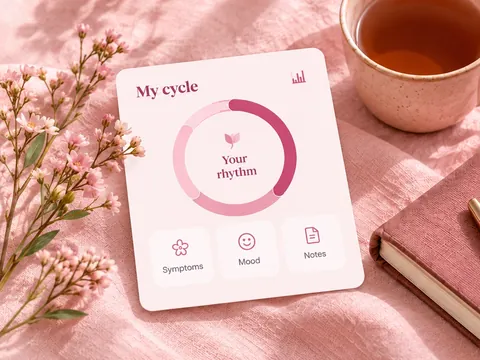 Getting started · 4 min readGetting the most out of LayaChoose your mode, log what matters and decide what others see.Read article
 Life stages · 3 min readEvery stage, your paceA space for the chapter you are in, and what you choose to track.Read article
 Your cycle · 4 min readYour cycle and the rest of your dayWhat connecting Laya with the rest of Jeevrit means, with your permission.Read article