
Getting started
How to get the most out of Laya, and what Jeevrit+ adds
Choose the mode that fits you, log your period and symptoms, read your estimates and set your privacy in Laya. Plus what stays free and what Jeevrit+ adds.
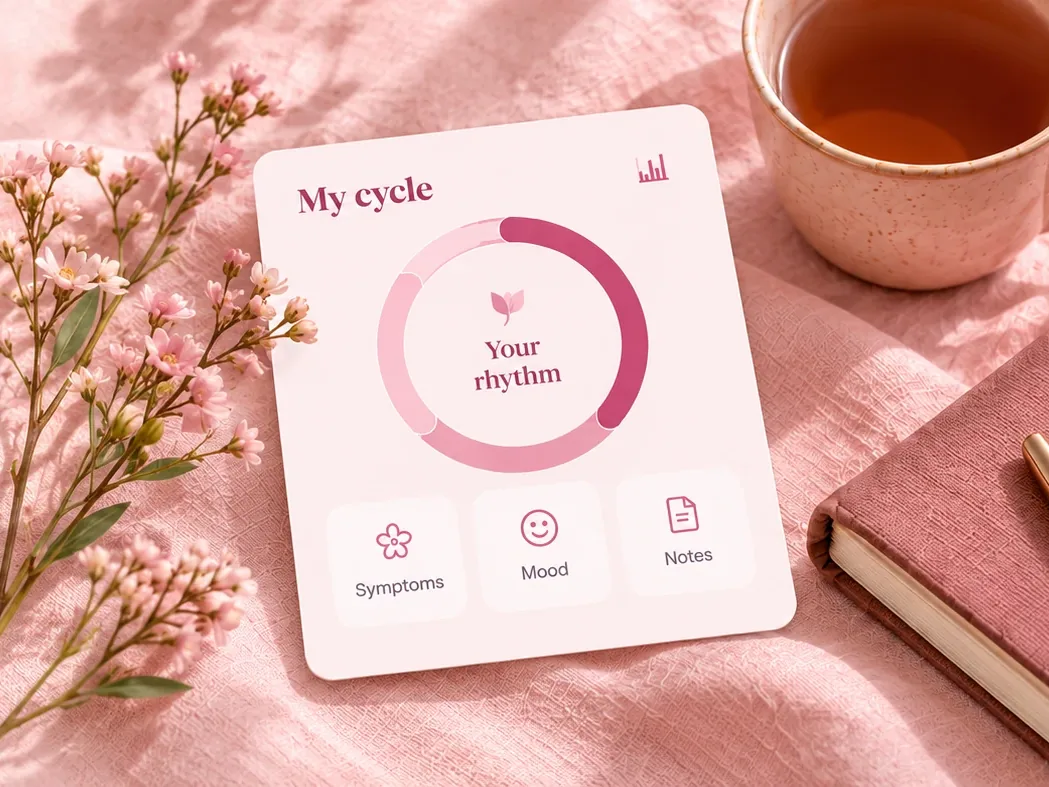
Laya is the cycle and reproductive-health space inside Jeevrit. It keeps a clear record of your periods and symptoms, shows honest estimates of what may come next, and lets you decide what is seen outside it. Tracking is free and complete. This guide covers how to set Laya up for the stage you are in, the habits that make your record useful, the privacy settings worth a minute, and what Jeevrit+ adds.
Choose the mode that fits you now
Open Laya from its card on your Today screen, or from the You tab. Then choose what you want it to help with: Track my cycle, Trying to conceive, Birth-control support, Track pregnancy, After birth or Perimenopause support.
- Trying to conceive adds ovulation tests, cervical mucus and your waking temperature, with a chart.
- Birth-control support keeps your method on schedule with reminders, such as before an implant or coil is due to be replaced.
Change mode whenever life changes; your past records stay. The guide to tracking through every stage covers what to note in each one.
Log a little, and often
Start with your period: the day it starts, the day it ends and how heavy the flow is. Then add the symptoms that matter to you, such as cramps, headaches, bloating, sleep or mood, and a short note when something unusual happens, like illness, travel or a new medicine.
- Log on the day if you can. Details blur within a week.
- Give it three or more cycles. Patterns need repetition before they mean much.
- Already tracking in another app? If it writes to Health Connect, Laya can bring in your periods, flow, cervical mucus and ovulation tests.
Not sure what is worth noting? Read what to log and why.
Read your calendar the right way
Laya keeps what you logged and what it estimates clearly apart. On your calendar, a logged day looks different from an estimated one, and your next period is shown as a likely range based on your own recent cycles, not a single promised date. Estimates get more useful after a few cycles, and less certain when your cycles vary a lot.
Set your privacy on purpose
A few settings decide what anyone glancing at your phone can see. They take a minute, and they are worth choosing deliberately:
- Your Today card: show your cycle, keep it vague, or hide the card.
- Reminder wording: say nothing specific, which is where Laya starts, mention Laya, or say what the reminder is for.
- A break: pause tracking whenever you need to, and resume when you are ready.
- Your data: export your Laya records, or delete Laya data on its own, without touching the rest of Jeevrit.
Share with someone, on your terms
If you want someone close to you to know when to be supportive, you can share chosen parts of your cycle with them, such as when your period is likely. You choose how long it lasts: a week, a month, three months or until you stop it. Sharing is free, has its own permission, and you can stop it at any time from Sharing with someone, under More.
What stays free
Everything you need to track your cycle is free and complete, on every plan: logging your period, flow, symptoms and notes, every mode, your calendar and estimates, reminders, sharing with someone, Health Connect, and pausing, exporting or deleting your data. Tracking your own cycle is not what Jeevrit+ sells.
What Jeevrit+ adds
Jeevrit+ is one subscription for Jeevrit, Stride and Laya. In Laya, it adds a deeper look at the record you have built:
- Patterns across your cycles: what recurs, found in your own logs.
- Your cycles beside published ranges: your own record, set next to what research describes.
- Summaries to keep or share: your cycles, written up for you, which can be useful to take to an appointment.
- Jivi, on your own cycle: talk through what you have logged.
Buying Jeevrit+ does not change any of your sharing choices. Sharing your cycle with the rest of Jeevrit has its own permission, separate from tracking it. Take it back at any time, and the rest of Jeevrit keeps no copy.
When to talk to a doctor
Laya keeps a record; it does not diagnose. See a doctor if your periods are very heavy, last longer than seven days or come less than 21 or more than 35 days apart, or if pain stops you from doing your usual things. A few months of your log makes that conversation easier. New to the rest of Jeevrit? Read how to get the most out of Jeevrit, or getting started with Stride if you train.
Sources
This article shares general information about menstrual health. It is not medical advice. Cycle estimates are not a method of contraception. If something feels wrong, or you are worried, please see a doctor or gynaecologist.
All Laya articlesGet Jeevrit to open Laya.
Log your period and symptoms, and see your records and estimates kept clearly apart. Laya lives inside the Jeevrit app.
Get JeevritFree on Google Play for Android.More from the Laya journal
 Cycle tracking · 3 min readWhat to log. What to notice.A clear record of your cycle, at your own pace.Read article
 Life stages · 3 min readEvery stage, your paceA space for the chapter you are in, and what you choose to track.Read article
 Your cycle · 4 min readYour cycle and the rest of your dayWhat connecting Laya with the rest of Jeevrit means, with your permission.Read article