
Exercise guide
Free weights for beginners: a simple guide to dumbbell training
What free weights are, how to choose your starting weight, what sets and reps mean, five beginner dumbbell exercises and how to progress safely.
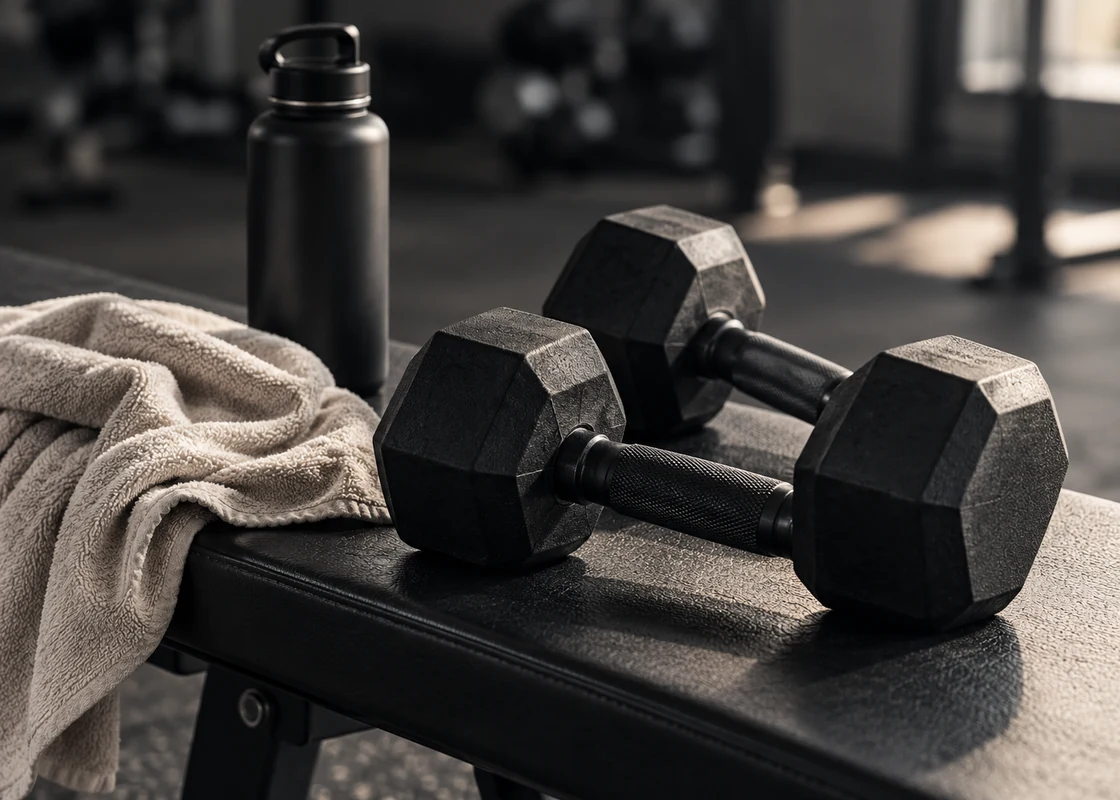
Dumbbells are among the most useful pieces of training equipment you can own: affordable, compact and just as handy at home as in the gym. They can also feel intimidating at first. This guide covers what you need for your first few weeks.
What counts as free weights
Free weights are loads you hold and control yourself, such as dumbbells, kettlebells and barbells. Machines guide the movement along a fixed path; with free weights, you control the path. That also trains your balance and the smaller muscles that steady each joint. Dumbbells are the friendliest place to start.
Sets, reps and rest, in plain words
- Rep: one complete movement, such as lowering into a squat and standing back up.
- Set: a group of reps done back to back.
- Rest: the pause between sets, often 60 to 90 seconds for beginners.
“3 × 10 at 10 kg” means three sets of ten reps with 10 kg. Two to three sets of eight to twelve reps is a common starting point.
Choosing your starting weight
Pick a weight you can lift for the whole set with good form, finishing with the feeling that you could have done two or three more. If your form breaks down before the end, it is too heavy. If the last rep feels as easy as the first, it is too light. Expect different exercises to need different weights: your legs will usually handle more than your shoulders.
Five moves that cover the basics
Most strength training comes down to five basic movements: squatting, bending at the hips, pushing, pulling and carrying. Here is one dumbbell exercise for each.
1. Goblet squat
Hold one dumbbell upright against your chest. With your feet about shoulder-width apart, sit your hips down and back, keeping your chest up. Push through your whole foot to stand.
2. Dumbbell Romanian deadlift
Hold the dumbbells in front of your thighs with soft knees. Push your hips back and let the weights slide down your legs while your back stays flat. Stop when you feel a stretch in the backs of your legs, then squeeze your bottom muscles to stand back up.
3. Dumbbell floor or bench press
Lie on your back with the dumbbells above your chest. Lower them with control until your upper arms reach the floor or bench level, then press them back up.
4. One-arm dumbbell row
Rest one hand and knee on a bench, with your back flat. Pull the dumbbell up towards your hip, keeping your elbow close, then lower it slowly.
5. Farmer’s carry
Hold a fairly heavy dumbbell in each hand. Stand tall with your shoulders down and walk 20 to 30 steps, then turn and walk back.
Warm up first
Spend five minutes moving easily: marching, arm circles, bodyweight squats. Then do a light first set of your first exercise before you start counting.
How to progress
When you can finish every set at your highest number of reps with good form, make it a little harder next time: add a rep or two, or move up to the next dumbbell. Small, steady steps are the safest way to keep improving.
Form and safety basics
- Lower the weight with control instead of letting it drop.
- Breathe out as you lift; avoid holding your breath.
- Clear the floor around you before you start.
- Muscles working hard is normal. Sharp pain, or pain in a joint, is a signal to stop.
- If you are pregnant, recovering from an injury or managing a health condition, check with a doctor first. A qualified trainer can also check your technique.
Ready to make it a habit? Read how to build a consistent workout routine.
Sources
This article shares general exercise information. If you have a health condition, an injury, are pregnant or are unsure whether an exercise suits you, check with a doctor or qualified trainer first. Stop if a movement causes sharp pain.
All Stride articlesFind your stride.
Plan your week, follow your session and log your sets. Stride lives inside the Jeevrit app.
Start trainingFree on Google Play for Android.More from the Stride journal
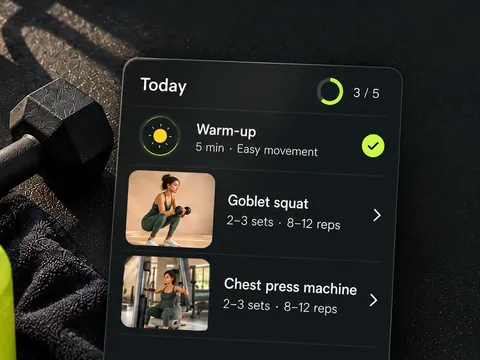 Getting started · 4 min readGetting the most out of StrideSet up your week, train with the app, and see what Jeevrit+ adds.Read article
 Training habits · 3 min readA routine you can keepChoose your days. Plan your session. Start where you are.Read article
 Recovery · 4 min readTraining with more contextSleep, optional cycle context and the choice to take a lighter day.Read article